
Myth 9: The Myth of the Endpoint
There is a question that surfaces in every leadership transition — whether the transition is intentional or arrives unexpectedly.
It doesn’t usually get said out loud. Not in the boardroom, not in the succession conversation, not in the carefully worded organisational update about the next chapter. And when a job ends suddenly, it doesn’t announce itself then either.
But it’s there.
Underneath the composure.
Underneath the professional narrative.
Underneath the gracious handover or the abrupt ending.
If I’m not the one holding this anymore, will I still matter?
It is one of the most human questions a leader can ask. And it deserves a more honest answer than most leadership conversations are willing to give.
Myth 8: The Myth of Disruption
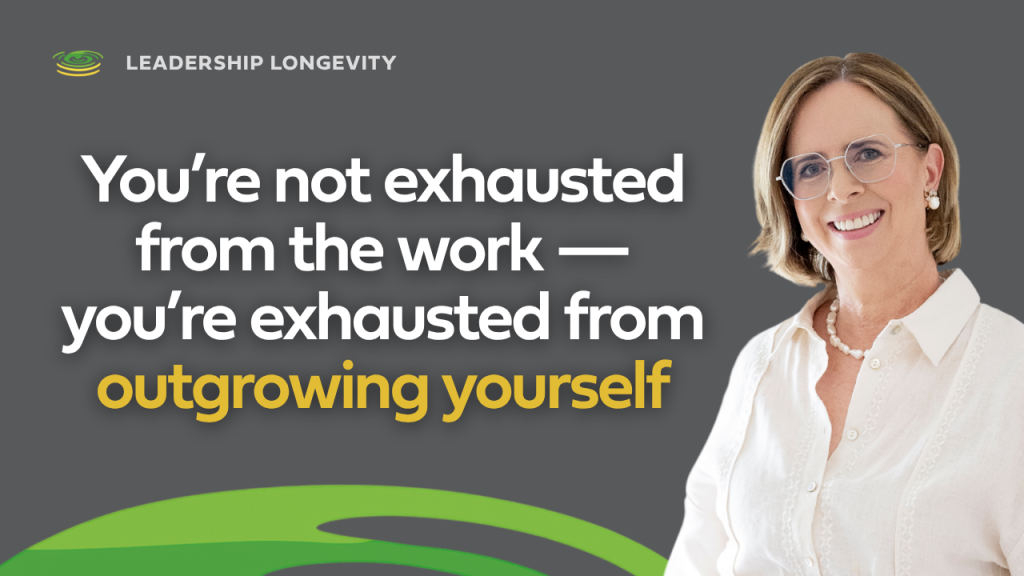
Most leaders in the middle of a major transition carry a quiet, private verdict about themselves:
I should be handling this better than I am.
It sits underneath the meetings, underneath the performance, underneath the carefully maintained composure. The sense that the disorientation they’re feeling is a personal failing — evidence of inadequacy rather than evidence of change.
That verdict, Elizabeth argues, is wrong.
And the cost of carrying it is far higher than most leaders realise.
Myth 7: The Myth of Authority
Speed doesn’t feel like a problem when you’re inside it. It feels like the job. It feels like how you show up, how you care, how you demonstrate that you’re across everything that needs you.
For many leaders, pace has become so fused with identity that questioning it feels almost like questioning their commitment.
But somewhere along the way — gradually, almost imperceptibly — the pace stopped being a choice. It became an inheritance. Something the environment handed over, something AI quietly accelerated, and something the leader simply absorbed without ever deciding to.
That is where the real problem begins.
Myth 6: The Myth of Speed
Speed doesn’t feel like a problem when you’re inside it. It feels like the job. It feels like how you show up, how you care, how you demonstrate that you’re across everything that needs you.
For many leaders, pace has become so fused with identity that questioning it feels almost like questioning their commitment.
But somewhere along the way — gradually, almost imperceptibly — the pace stopped being a choice. It became an inheritance. Something the environment handed over, something AI quietly accelerated, and something the leader simply absorbed without ever deciding to.
That is where the real problem begins.
Myth 5: The Myth of Holding On
At some point in every leadership career, experience stops being the asset and starts being the obstacle.
Not because the experience wasn’t real. Not because the results weren’t earned. But because the world shifted and the strategies, styles, and identities that built the track record quietly stopped fitting the terrain ahead.
Most leaders sense this before they name it. And the response, almost universally, is to hold on tighter.
Special Episode: The Leadership Longevity Ecosystem
Every pattern you keep repeating.
Every pressure point you can’t explain.
Every moment you’ve lost clarity or lost yourself.
There’s a reason for all of it — and nobody ever showed it to you.
In this special edition, Elizabeth reveals the Leadership Longevity Ecosystem™, the living architecture underneath every leadership struggle you’ve ever had. This is the framework that explains not just what is happening in your leadership, but why it keeps happening — and what it’s quietly shaping in the people around you.
Myth 4: The Myth of Self-Sacrifice
A deep dive into why over‑giving, over‑functioning, and quiet martyrdom are shrinking your influence — and how to care deeply and lead without disappearing.
There is a version of leadership that gets quietly celebrated. The leader who absorbs the pressure so the team doesn’t have to. Who steps in before things go wrong. Who carries more than their share because they care more than most.
It looks like strength. It looks like devotion. And for a time, it earns genuine admiration.
But there is a cost to this kind of leadership that rarely gets named — until the leader who has been giving everything suddenly has nothing left.
Myth 3: The Myth of Health as a Perk
What if the thing you keep calling “personal” is the very thing shaping your leadership? Health is often minimised — treated as private, separate from the work, something Elizabeth sees leaders handle quietly on the side. It feels like a reasonable boundary. In practice, it’s one of the most costly assumptions in leadership. Because health was never just personal. It was always systemic.
Myth 2: The Myth of Deferral
You know the promise. After this project. After things settle. Elizabeth names what that quiet bargain is actually costing, and why the smallest deposit made today compounds into everything your future self will rely on.
Myth 1: The Myth of Endurance
Most leaders are taught that pushing harder is how you lead well. But endurance without recovery isn’t resilience — it’s depletion with better branding. Elizabeth dismantles the first myth of modern leadership, and introduces the rhythm that actually sustains the long arc.