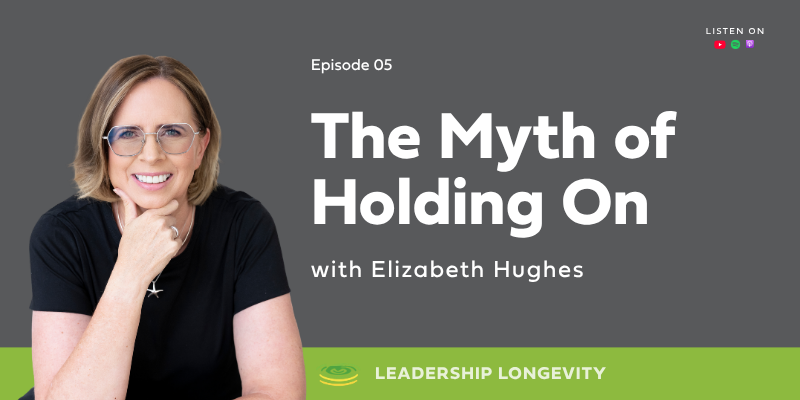
Authority Is The Crown. Influence Is The Kingdom.
Most leaders don’t realise the cost of authority until the room goes quiet in ways they can feel but can’t explain.
Think about the last time someone on your team told you something you genuinely didn’t want to hear. Not the softened version. Not the professionally packaged version. The real, unfiltered thing.
If that question is harder to answer than it should be, the gap isn’t about honesty. It isn’t about culture. It isn’t even about communication. It’s about the crown — and how you’re holding it.
What you'll discover in this episode
- Why leaders cling to authority and what it reveals about fear
- How the myth of authority distorts your influence
- The lived experience of leading through authority rather than presence
- How influence expands the moment authority becomes less visible
- The science of why presence is greater than position
- The difference between relying on authority, denying it, and integrating it
- Tools to shift your relationship with authority this week
The room your title gave you
A title opens a door.
It puts people in a room, directs their attention, and signals that someone here has been designated to lead.
But a title cannot do the thing that makes leadership actually work.
The room is given.
The influence has to be built.
And the leaders who confuse the two often spend years wondering why, despite the respect, the compliance, and the visible authority, something in the room never fully opens.
“You’re respected, but not always followed. You’re obeyed, but not always trusted. You’re visible, but not always believed.” — Elizabeth Hughes
Two fears, One Fracture
Most leadership conversations focus on the leader who grips authority too tightly — the one whose positional power fills the room before their presence does.
But Elizabeth names a second pattern that is just as costly and far less examined:
The leader who rejects authority entirely.
The collaborative leader.
The approachable leader.
The leader who insists they’re “just part of the team.”
It looks humble.
It lands as confusing.
The authority hasn’t disappeared.
It has simply gone unacknowledged — which makes it harder to navigate, not easier.
“We cling to authority because we fear becoming irrelevant. We reject authority because we fear becoming too much. Both are identity protections. Both are existential strategies. Neither creates influence.” — Elizabeth Hughes
Different fear. Same fracture.
What authority actually costs
A leader who relies too heavily on authority creates a particular kind of brittleness — one that isn’t visible until pressure arrives.
- Decisions get deferred upward.
- Initiative quietly atrophies.
- People become skilled at meeting expectations rather than developing judgment.
And the leader who denies their authority creates a different kind of distortion:
- A vacuum where clarity should be.
- A room organised around unspoken power.
- A team navigating signals the leader refuses to acknowledge.
Both patterns fracture influence.
Both destabilise the ecosystem.
Why presence outperforms position
Across archetypal psychology, ecological systems, and relational neuroscience, the evidence points in the same direction:
Presence is greater than position.
Influence is emergent.
It cannot be assigned.
It must be cultivated.
A leader’s presence — their steadiness, attentiveness, and relational clarity — shapes the nervous systems of the people around them.
That shaping determines:
- how clearly people think
- how safely they speak
- how confidently they act when the leader isn’t in the room.
“Leaders don’t cling to authority because they’re power hungry. They cling to it because they’re scared of becoming invisible.” — Elizabeth Hughes
The great irony is that the tighter the grip on authority, the less visible the leader actually becomes. Because presence, real presence, cannot be performed through position.
The difference between a crown and a kingdom
Elizabeth makes a distinction that reframes the entire conversation:
Authority ends when the role ends. Influence does not.
A leader can hold a title for decades and leave behind nothing that continues without them. Or they can build something in the people they develop, the culture they shape, and the conditions they create — something that outlives the role entirely.
“Authority ends when the role ends. Influence continues long after you’ve left the room. Authority is inherited, influence is cultivated. Authority is positional, influence is relational. Authority is finite, influence is renewable.” — Elizabeth Hughes
The kingdom was never the role.
It was always the room — how people felt inside it, how clearly they could speak, how steadily they could move when the leader stepped back.
That is what endures.
That is what is worth building.
Integrating, not discarding
The goal is not to abandon authority. It is to hold it differently, to integrate it with enough self-awareness to know when it serves the room and when it shrinks it. To use the position as a platform for presence rather than a substitute for it.
That shift begins with understanding the relationship with authority. Where it came from, what it is protecting, and what it is costing the people who need access to the leader’s best thinking, not just their title.
The crown was never the point.
The kingdom always was.
Authority is a symbol.
Influence is a force.
And the leaders who integrate the two — consciously, relationally, and systemically — are the ones who leave something genuinely lasting behind.
Listen to the podcast Subscribe to the Leadership Longevity Podcast on Apple Podcasts, Spotify, or YouTube.
Work with Elizabeth Ready to design leadership that renews rather than depletes? Book a discovery call at tmegrp.com